Classify the event status before using the winner field
A tennis retirement ends play without completing the scheduled contest. That makes it different from an ordinary completed match, and different again from a walkover before play starts. When reviewing a Zora tennis selection, identify the event status before applying a score-based explanation. A winner shown in the competition record does not by itself tell you how every betting market is treated.
A retirement concerns a contest that began and then stopped because a player did not continue. A walkover before play, a disqualification and an ordinary completed result can involve different factual circumstances. Identify which occurred from the official event status, then read the relevant market rules. Do not treat the tournament's progression decision as a complete betting settlement instruction. A player may advance without every condition of a total, handicap or set market having been completed in the same way. This guide deliberately avoids stating that all tennis tickets are refunded or that the advancing player wins every associated selection.
Different markets can be at different stages of completion
An illustrative match stops at one set each with the third set at 2–1. The match winner, total games, third-set winner and a previously completed first-set market concern different conditions. Some conditions may already have been determined, while others remain unresolved. The operator's retirement and market-specific rules decide their treatment; this guide does not assume a universal refund or a universal loss.
In the invented one-set-all example, a first-set result was already observed, while the third-set outcome was unfinished when play stopped. A games total may be above, below or still dependent on further play relative to its accepted line. Whether a determined condition stands and how an unresolved one is treated must come from the selected rules. Make a list of each ticket's question rather than copying the same status across all bets on the fixture. Two tickets can refer to the same players and still need different reasoning. The score identifies what happened; the rule determines how that event status affects each accepted market.
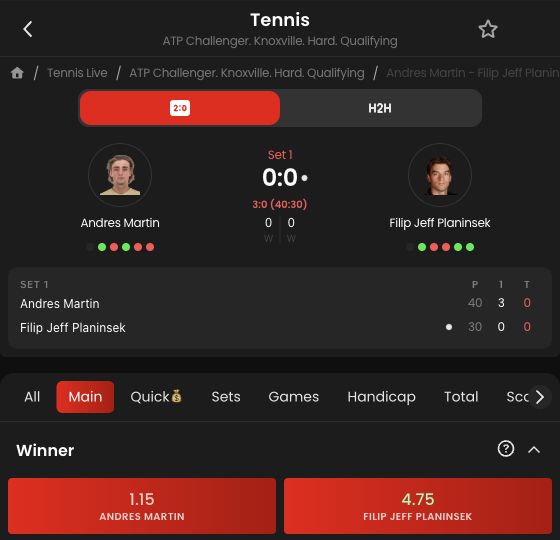
Preserve the exact score and counting definition
Record whether play began, which sets were completed and the score when the stoppage occurred. Preserve the full market name and accepted line. A total-games query also needs the counting definition, including any treatment of tie-breaks or a match tie-break. Do not replace those details with the final winner field in a tournament listing.
For game totals, a tie-break or match tie-break may have a particular counting treatment, so retain that definition alongside the line. Note the competition and format, because an abbreviated deciding stage is not automatically equivalent to a full set. Preserve whether the market concerned a single set, the entire match or one player. A notation such as 2–1 without its set number and context is ambiguous. If you saved a score during the interruption, record when it was observed and distinguish it from a later official correction. This creates a factual chronology without claiming that an early screen must override the operator's settlement source.
Ask about the applied rule, not a general refund assumption
If the ticket remains pending, distinguish a delay in confirmation from a settled outcome you dispute. Send support the ticket identifier and the retirement circumstances, asking which rule was applied. The most useful question is about the exact market and status, not simply why the player was declared the winner.
First check whether the ticket is awaiting confirmation, voided, won or lost. A pending entry is not yet a settled dispute. For an already settled ticket, ask which retirement clause and market-specific definition were applied, providing the reference and exact wording. If the response cites a counting rule, compare it with the score components you retained. Avoid opening multiple cases with different abbreviated descriptions of the same event. The useful outcome is a traceable explanation of one ticket. This process does not promise a refund or presume a mistake; it makes the question precise enough for either a correction or a supported explanation.