Regulation and eventual winner are different questions
Ice hockey listings can present a three-way regulation result alongside a winner market that uses a different settlement boundary. Those are not interchangeable merely because both show the same teams. In Zora, read the named period and any overtime or shoot-out wording before deciding which result the selection concerns.
Begin by reading whether the selected proposition has three result categories or another explicitly defined format. A draw can be a valid outcome at a regulation boundary even when the competition ultimately requires one team to advance or win. The sporting need for a winner does not remove that earlier draw from the record. Do not decide the market scope from team names or a familiar competition alone. In Zora, expand the selection's details and preserve the period wording. This is especially important when a mobile menu places regulation and winner markets near each other with similar participant labels and different prices.
A later deciding stage does not rewrite regulation
An illustrative match is tied 2–2 after regulation, then a winner is determined later. A regulation draw remains a statement about the 2–2 score at that boundary. A market concerning the eventual winner asks a different question. The way a deciding shoot-out is represented in a published final score does not automatically settle every total-goals market in the same way.
Suppose the fictional 2–2 regulation game is followed by an additional deciding stage. A regulation-result selection uses the earlier boundary, while an eventual-winner selection uses its stated completion rule. A displayed final score may include a convention for the deciding stage that is not automatically the counting rule for every total. Therefore keep the match status, regulation score and later outcome in separate fields. This guide does not claim a universal Zora policy on adding shoot-out results to totals. The correct question is which scoring components the accepted market includes, not which final number appeared most prominently in a news summary.
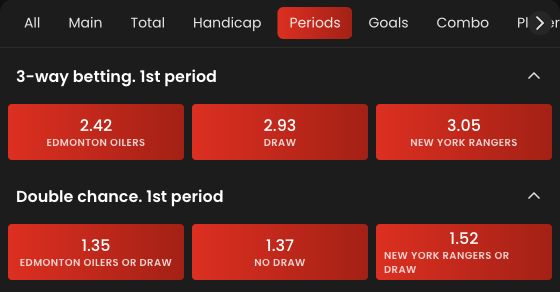
Period scoring must be isolated from the cumulative score
A period market should be reconstructed from that period's own scoring. If the first period is 1–0 and the second period is 0–2, the cumulative score after two is 1–2, but the second-period score is still 0–2. Use the period record rather than subtracting numbers from incomplete screenshots. Team totals and match totals also require separate counts.
Extend the invented period record with a third period of home one and away zero. The three period scores would then combine to 2–2, but the second-period market still concerns 0–2. A home-team second-period total is zero, while the combined second-period total is two. Those counts answer different questions at the same numerical line. Use a complete period record instead of screenshots captured at unrelated moments. If a statistic is corrected, preserve the correction context. The arithmetic is straightforward only after the inputs are aligned to the selected period, participant scope and official record used for settlement.
Retain the shoot-out and overtime definition
For review or a support request, retain the full market title, selected team or total, line, period and final ticket status. Ask specifically how overtime and shoot-out treatment applies to that market if the wording is unclear. Do not substitute a rule from a different hockey competition or a different sportsbook.
For an interruption, postponement or unusual competition format, read the relevant rule separately from ordinary period arithmetic. Retain the accepted odds and market description rather than reconstructing the ticket from a later menu that may have changed. In a support query, state whether the disagreement concerns a regulation result, a period count or treatment of the deciding stage. Include the ticket reference and the score components you used. This lets the response address one defined question. An assertion that a team eventually won cannot, by itself, establish a win on a regulation selection or determine the count in a particular period.